What is in Shia Ilm
Choose a part of the app to see what it does. Every screen here is from the Android app as testers have it now.
Hadith library
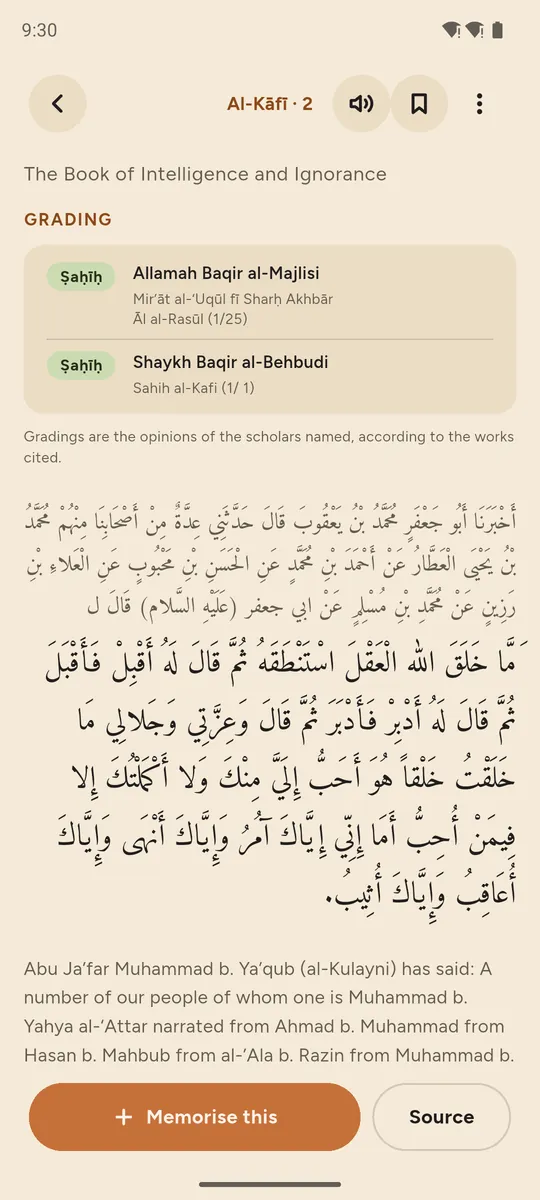
The Shia hadith collections in Arabic beside their English, read book by book and chapter by chapter, with each narration's grading and chain of narrators.
- 24 books and 38,746 narrations come with the app: al-Kāfī, Man Lā Yaḥḍuruh al-Faqīh, Tahdhīb al-Aḥkām, Nahj al-Balāgha and more.
- Wasāʾil al-Shīʿa adds 35,410 more as an optional download, for 74,156 in all.
- Gradings are shown as the scholars gave them, with the scholar and the work named. Where there is none, nothing is asserted.
- The chain of narrators has its own screen: every link, what kind of link it is, and a warning when the chain is incomplete.
- Read aloud, add notes, collect into study lists, memorise, or share a link that opens the same narration.
Wasāʾil's English, and the Urdu of the narrations, were written by a model. They are marked that way in the app and have not been reviewed by a person.
Search
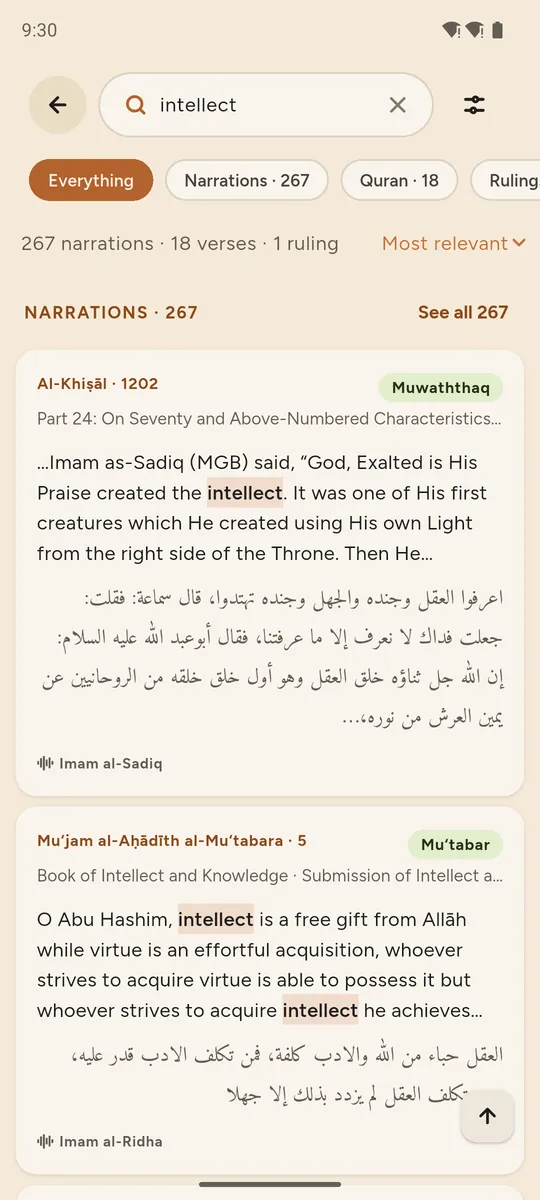
One search field across the narrations, the Quran and the rulings, each with its own count, and filters for book, theme, the Imam a report goes back to, and grading.
- Arabic or English, with or without diacritics.
- Browse by theme (27 run through the whole library) or by the Imam a report is attributed to.
- Filter by book, theme, narrator and grading strength; sort by relevance or order in the book.
- An optional Smart search download finds what is closest in meaning to a question, not just the words typed.
Quran and tafsir
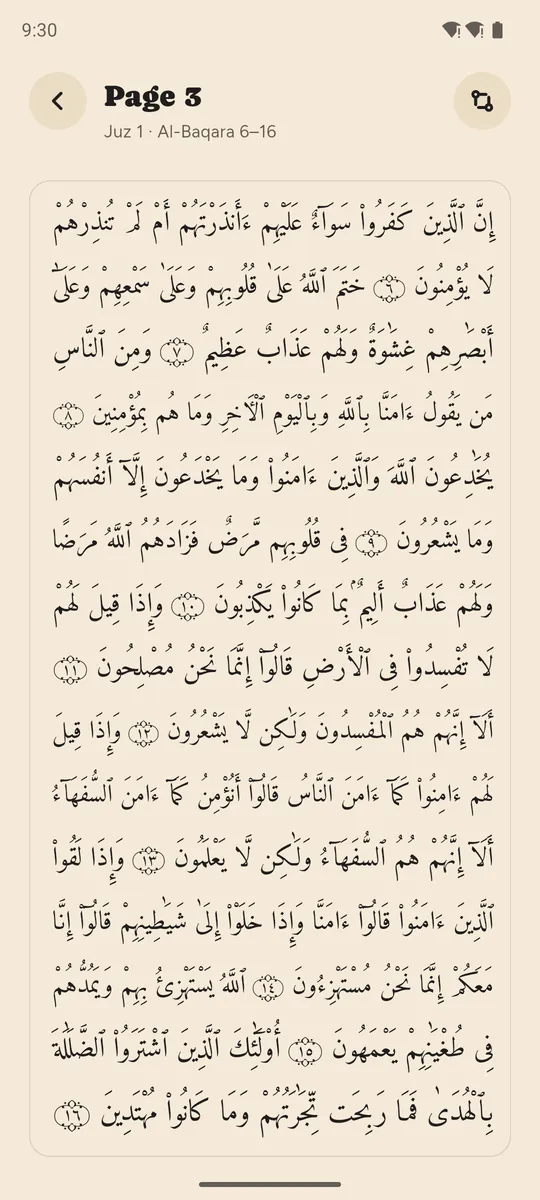
The whole Quran with translations, read verse by verse or as the Madinah mushaf page, with classical and modern commentaries on every verse.
- One field finds a surah by name, a verse by address (2:255) or a word anywhere in the text.
- Read a surah verse by verse, a juz straight through, or the 604 mushaf pages as printed.
- Tafsir per verse: Majmaʿ al-Bayān, al-Mīzān, Tafsīr al-Qummī, al-Tibyān, and Namoona in English and Urdu.
- Mark where you have got to, add a verse to your daily plan, or copy a link to it.
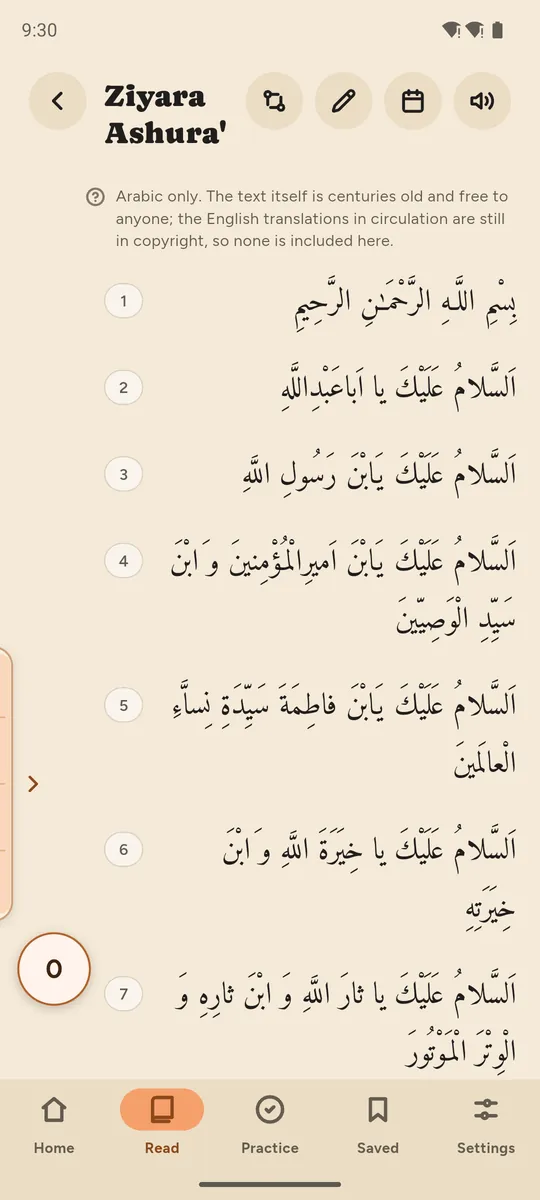
Duas and ziyārāt
The supplications and ziyārāt in Arabic, from the devotional books and from the hadith collections, each with its source and when it is read.
- Mafātīḥ al-Jinān: 460 texts in the author's order, many with Urdu and English.
- al-Ṣaḥīfa al-Sajjādiyya, in the book's own order.
- Miṣbāḥ al-Kafʿamī: 826 texts, Arabic with English and Urdu.
- Over a thousand duas narrated in the hadith books, each with its chain and grading.
- A counter on the page for texts that are repeated, and read-aloud.
How to pray
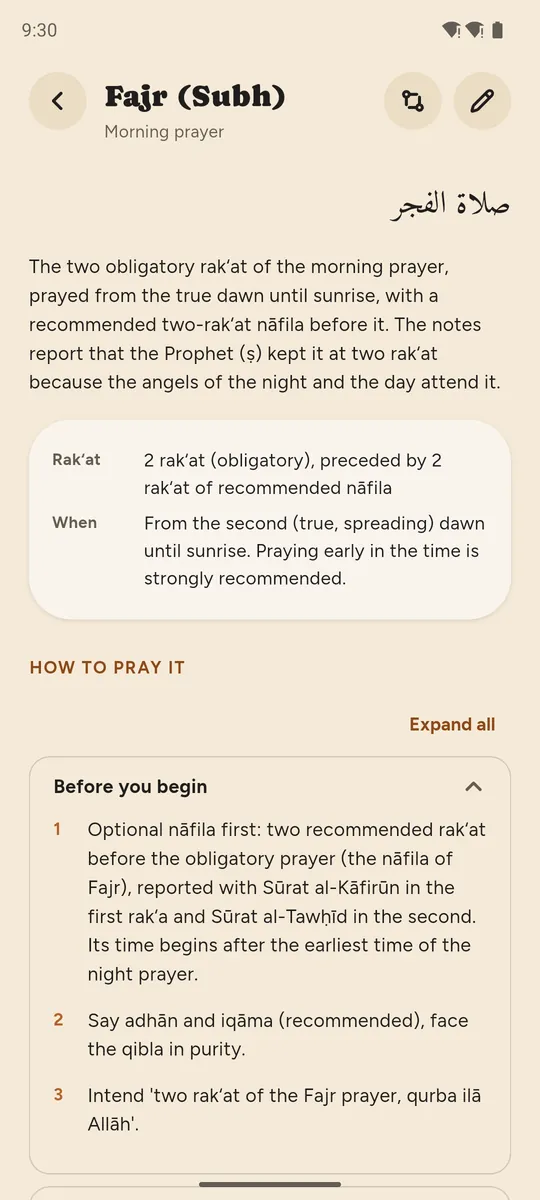
The daily prayers and over a hundred others, each with when it is prayed, its rakʿāt, and the steps folded rakʿa by rakʿa, with the narrations and duas they come from.
- Daily, occasional, night and recommended prayers, the prayers of the week and of the calendar, and those of the Fourteen Infallibles.
- Each step names where it comes from; the cited texts open inline.
- Where the marājiʿ differ, the page says so.
Compiled from the sources each page cites, and not reviewed by a scholar.
Prayer times and trackers
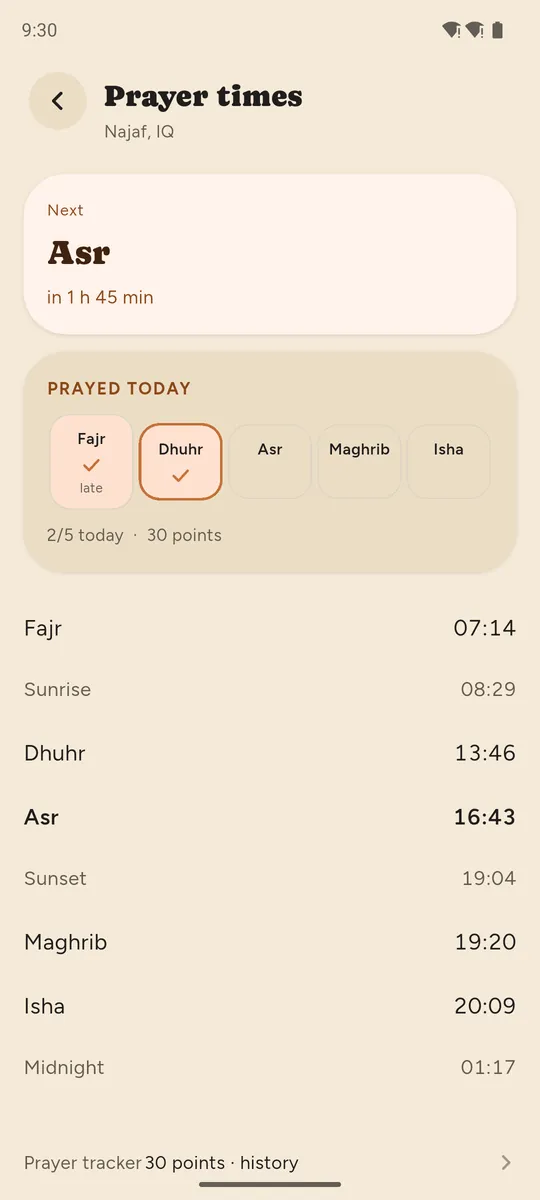
Today's prayer times for your city, which prayers you have marked, a score and streak for the month, and a count of the qaḍāʾ prayers you owe.
- Times are worked out on the phone from a city you pick. No location permission, no connection.
- Mark a prayer from the app or the home-screen widget; prayed on time earns more.
- A 28-day history, streak and level.
- Qaḍāʾ: enter what you owe for each prayer and count it down as you make them up. Optional reminders.
Practical laws
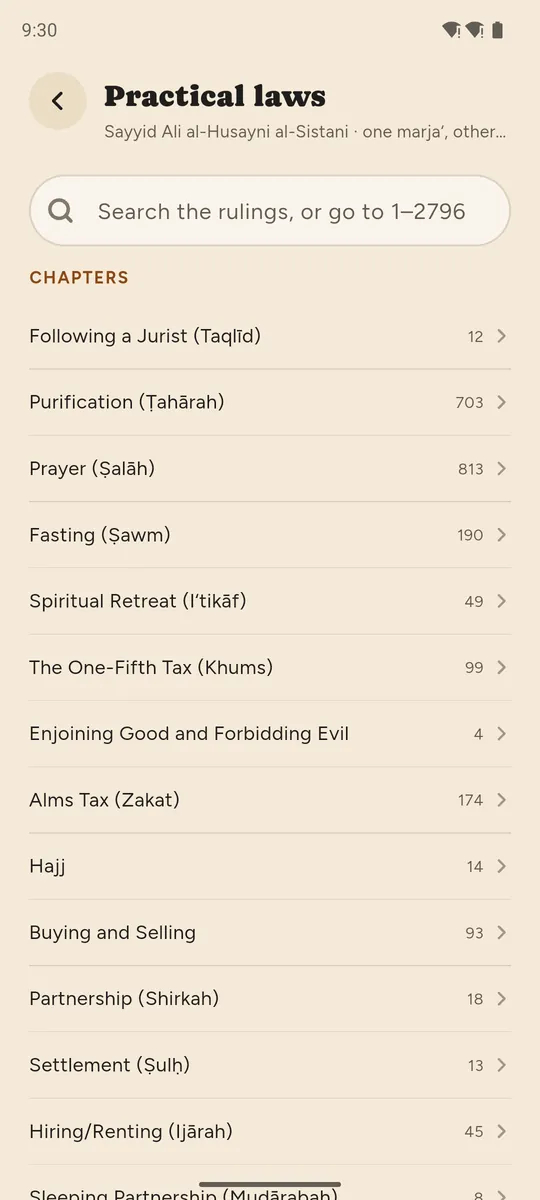
The rulings of two marājiʿ, chapter by chapter: Sayyid al-Sistani (2,796 rulings) and Sayyid Khamenei (2,094). The authority is named on every ruling.
- Search the rulings, or jump straight to a number.
- Choose the marjaʿ you follow in Settings.
- Rulings appear in search beside the narrations and the Quran.
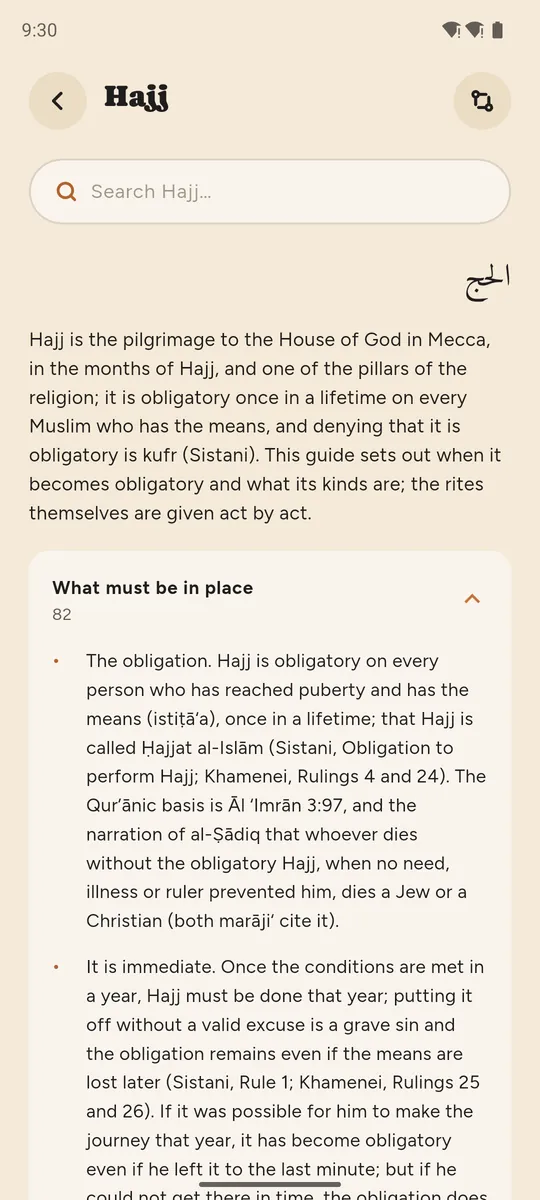
Hajj and ʿUmra
A guide to Hajj al-Tamattuʿ and ʿUmra: what must be in place, the stages in order, and every rite on its own page, with Sistani's and Khamenei's rulings named where they differ.
- 27 acts, each with its steps, requirements, what is forbidden, recommended acts and expiations.
- Cites the rulings by number and the Wasāʾil chapters they rest on.
Compiled from the marājiʿ's published guides, and not reviewed by a scholar.
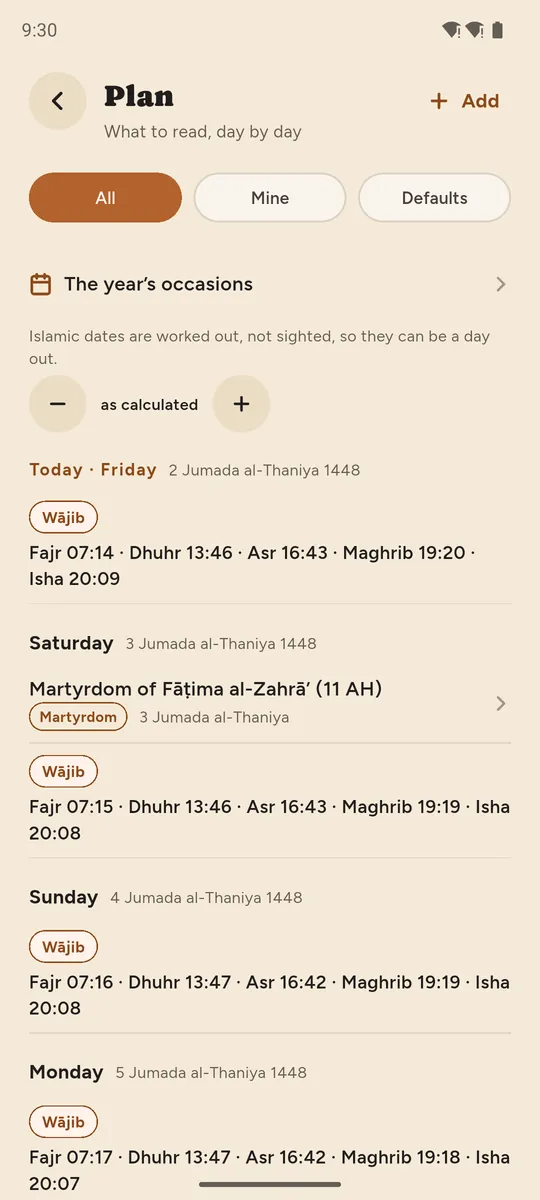
Daily plan and calendar
What to recite each day of the week, the book's own assignments or yours, and the Islamic year month by month with the occasions and ziyārāt for each.
- Today in both calendars; Islamic dates are calculated and can be moved a day to match your moon-sighting.
- Births, martyrdoms and Eids as the sources give them.
- Add a surah, dua or Mafātīḥ text to a day or a night, and count how many days in a row you have read it.
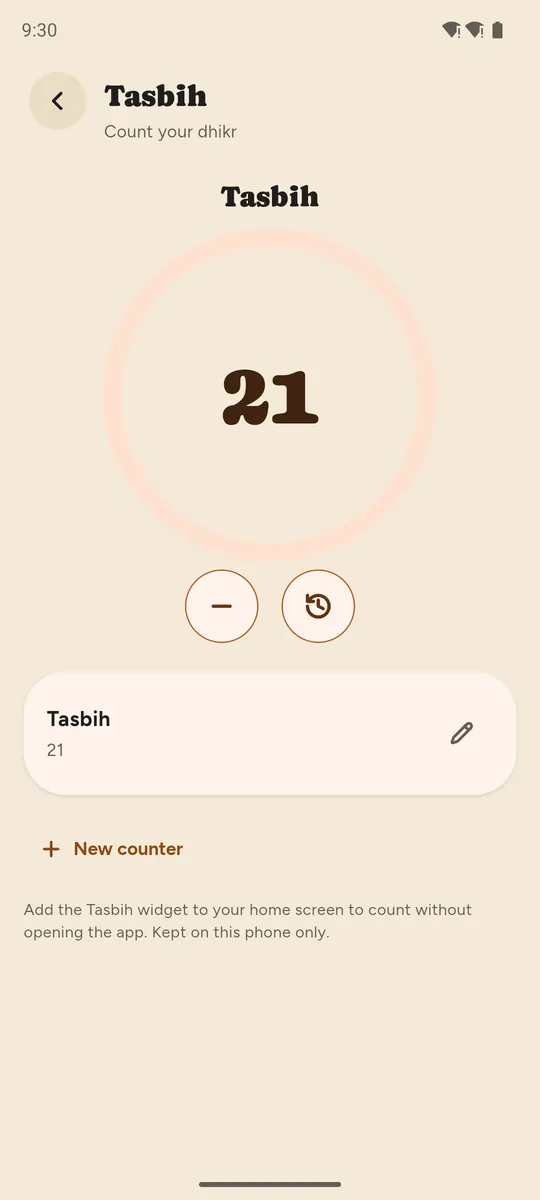
Tasbih
A counter with a target, a chime and a vibration at the end of each round, and as many named counters as you like.
- Combine several dhikrs into one sequence, such as the tasbīḥ of Fāṭima al-Zahrāʾ.
- The home-screen widget counts without opening the app.
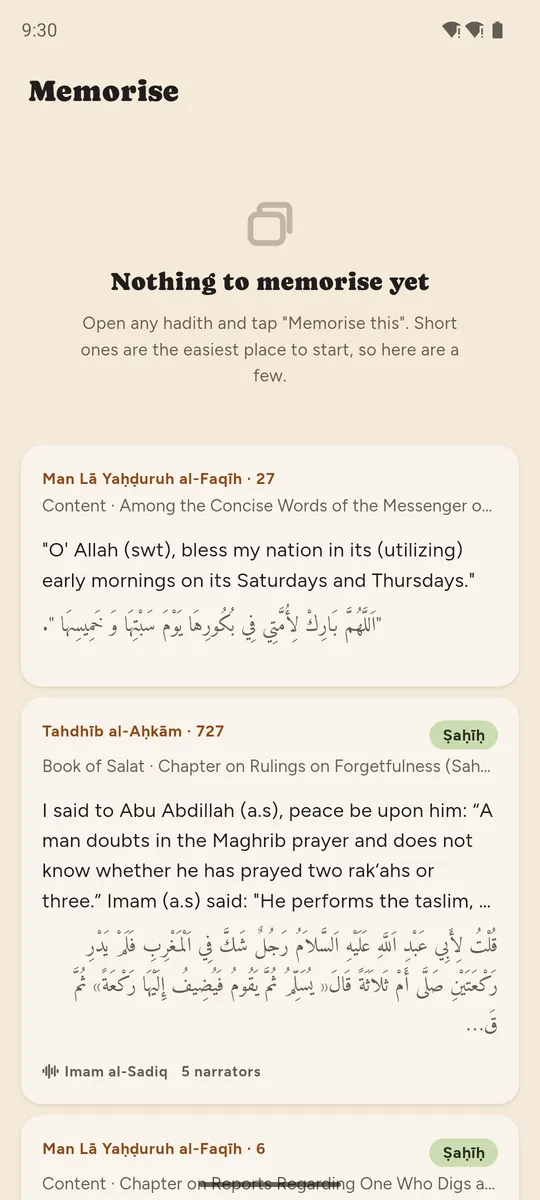
Memorise
Learn narrations by heart. A card comes back just before you would forget it, and you grade how well you recalled it.
- Tap Memorise this on any narration, or start from the short ones suggested.
- Memorise the Arabic or the translation.
- Turn a collection into a deck.
Notes and collections
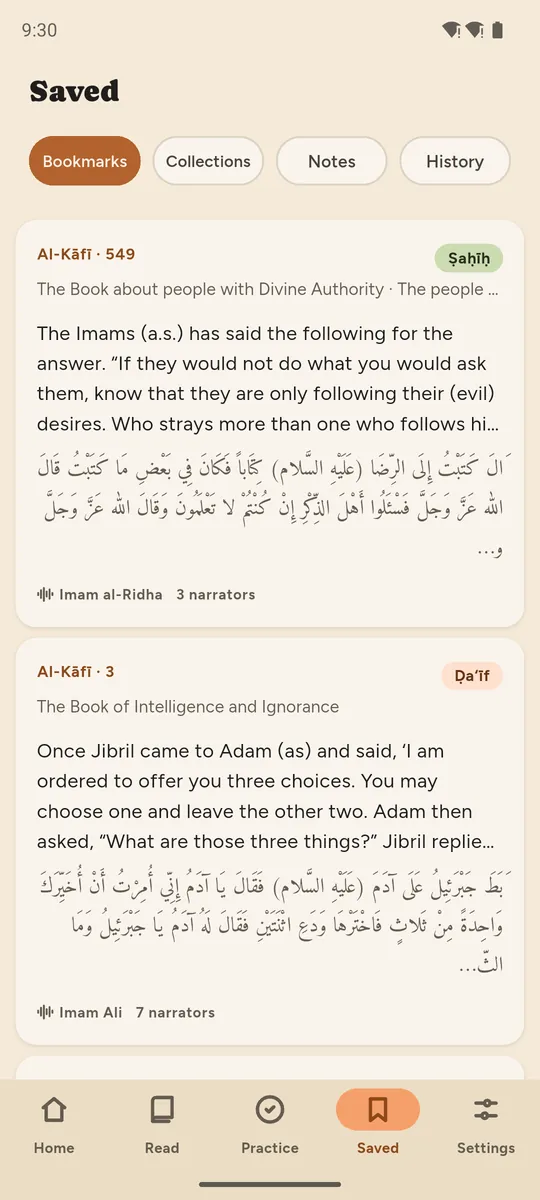
Bookmarks, study collections, a reading history, and notes written as dated threads on a narration, a theme, a verse, a dua or a ruling.
- Return to a narration months later and add a thought beside the earlier one, not over it.
- Collections hold narrations you are working through, and can be memorised as a set.
- Nothing leaves the phone.
Offline, downloads and voices
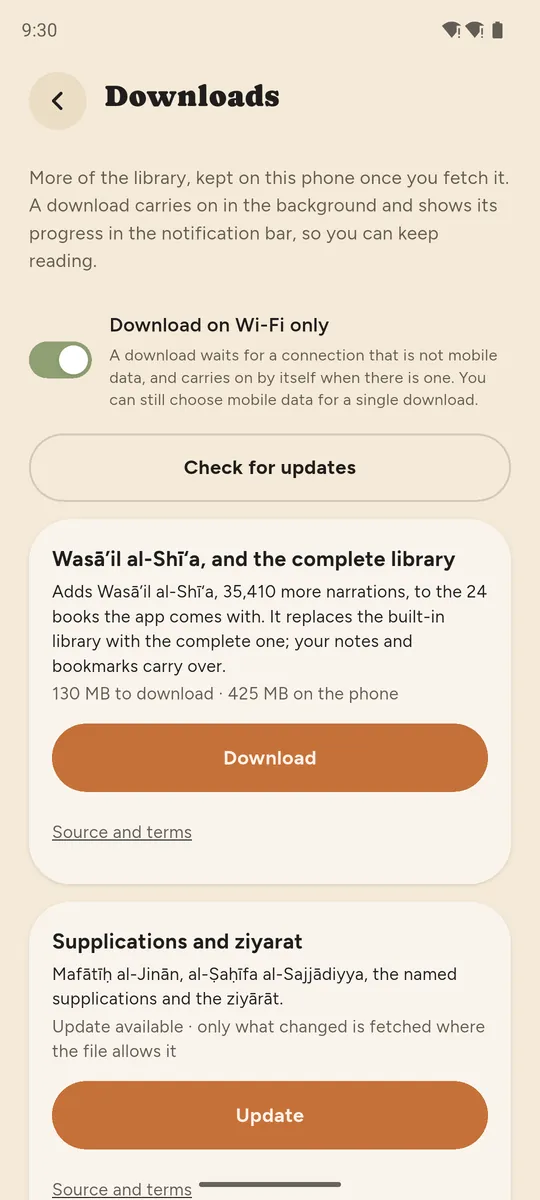
The library is on the phone. Larger parts are downloads you choose, each checked against a fingerprint the app carries before it is used.
- Optional downloads: Wasāʾil al-Shīʿa, the duas and ziyārāt, Tafsīr Namoona, Urdu tafsīrs, and Smart search.
- Downloads carry on in the background and wait for Wi-Fi if you ask.
- Updates fetch only what changed, and only when you tap Check for updates.
- Reading aloud with the phone's voice, or with neural voices that run on the phone (being tested).
Settings and dark mode
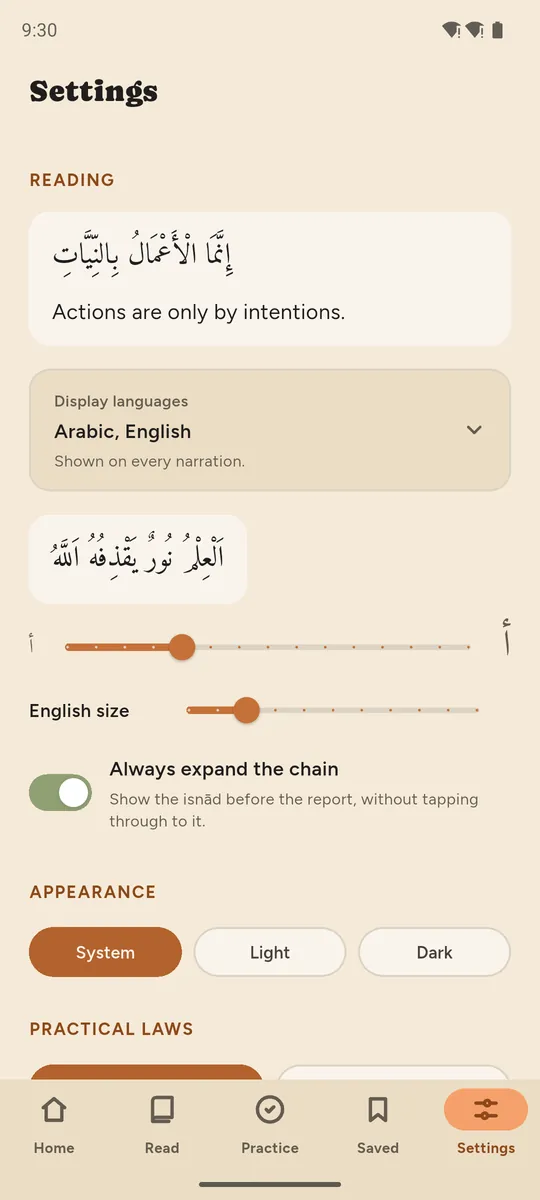
Choose the languages shown on every narration, the size of the Arabic and the English, and a light or dark theme.
- Show Arabic with English, Urdu, or both.
- Separate text sizes for the Arabic and the translation.
- Light, dark, or follow the phone.